

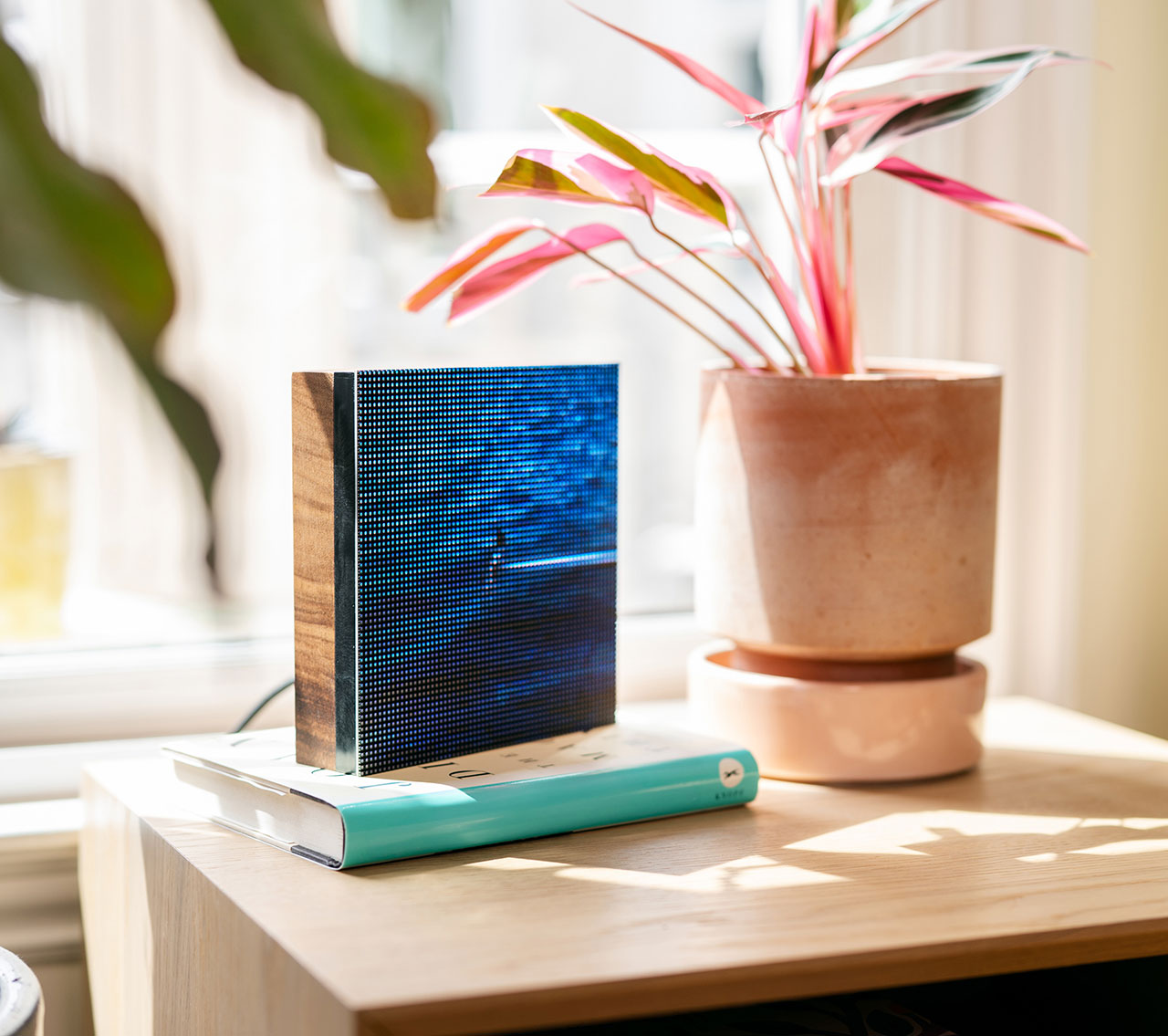


Like with most things that have been infinitesimally incorporated into an increasingly compact smartphone, the album art that pops up when we’re listening cannot be fully appreciated – a disconnect Tuneshine aims to remedy.
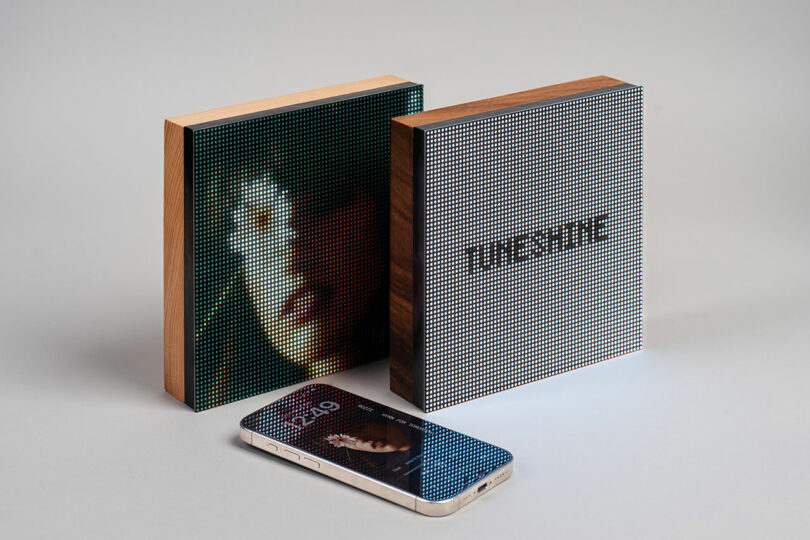
Album art is an oft-overlooked creative form that can be incredibly subtle and bold in directly or indirectly expressing the intended emotion of the intangible music track playing. These carefully composed visuals are arguably more accessible and widespread than fine art. And yet, they can be abstract or representation, nostalgic in the embodiment of a bygone era, and visionary in the speculative suggesting a potential future.

On a 5.91 × 2.83 inch handheld, it’s hard to fully comprehend all the nuances of composition, minute detail, and image-making technique: photography, painting, drawing, collage, or any mix thereof.

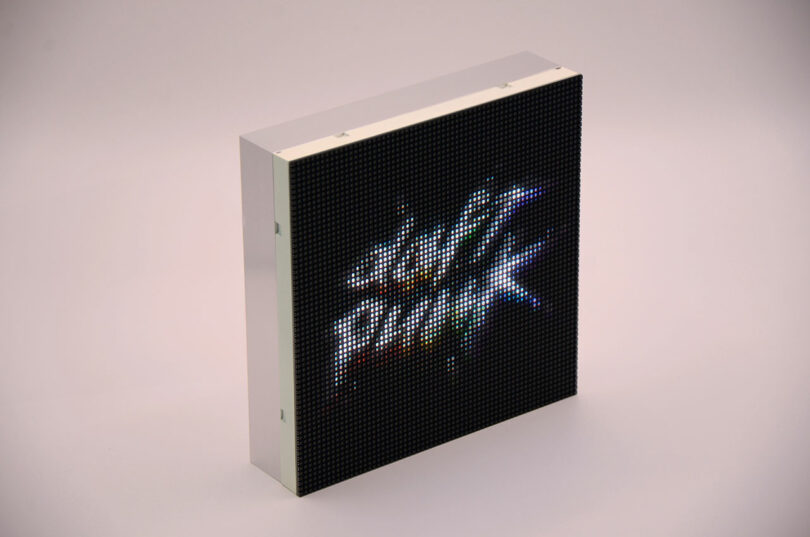
That all changes with the new 6.3 x 6.3 inch Tuneshine square LED display, designed by San Francisco entrepreneur Tobias Butler. The compact device seamlessly connects to music apps like Spotify, Apple Music, Sonos, etc. and existing speakers for direct image diffusion. The brightness can be controlled. When not playing music, one can even program Tuneshine to display other types of images.

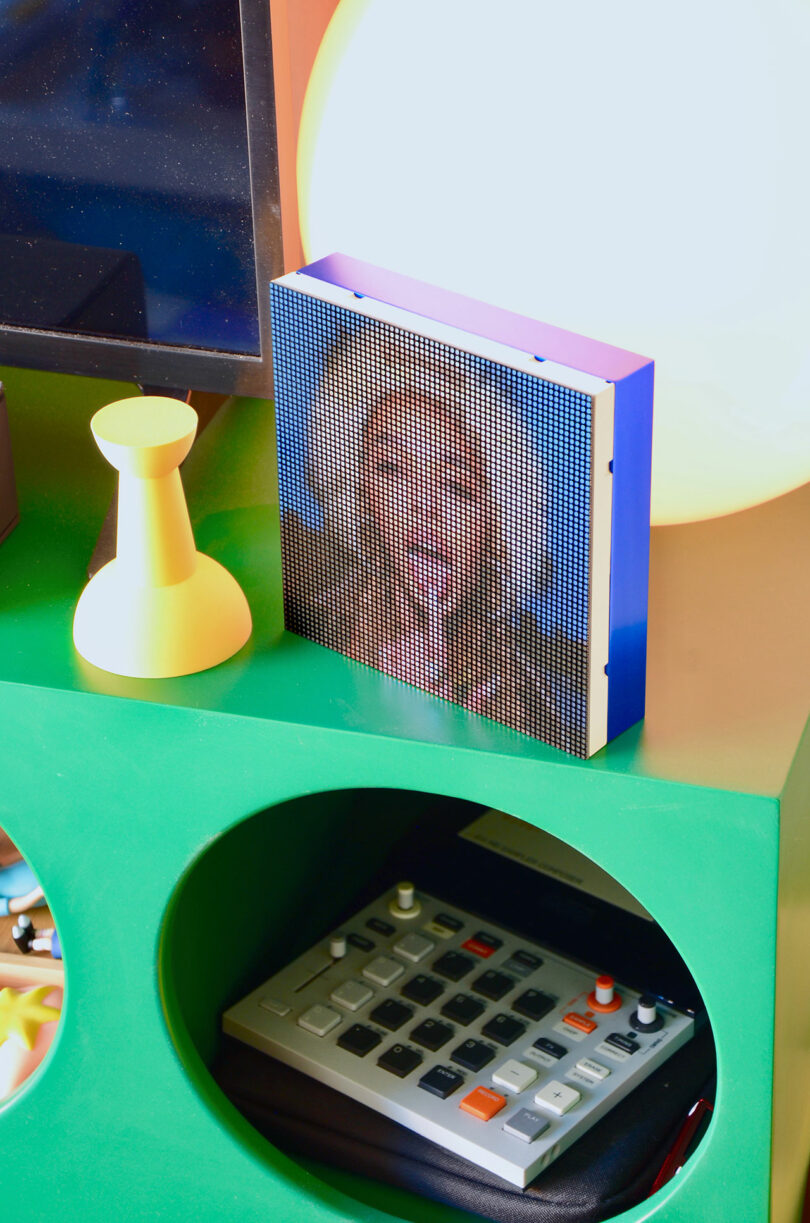
Seeming to distort the visuals, the vivid 64×64 extra-bright pixel screen animates them in an unexpected fashion. It borrows from the resampling technique used by graphic designers and photo editors to blow up low-resolution pictures. They essentially break down the pictures into grids of smaller circles. Though not a true replication, the overall effect is preserved. One can even use Shazam’s new image search function to discover the music someone else is playing.
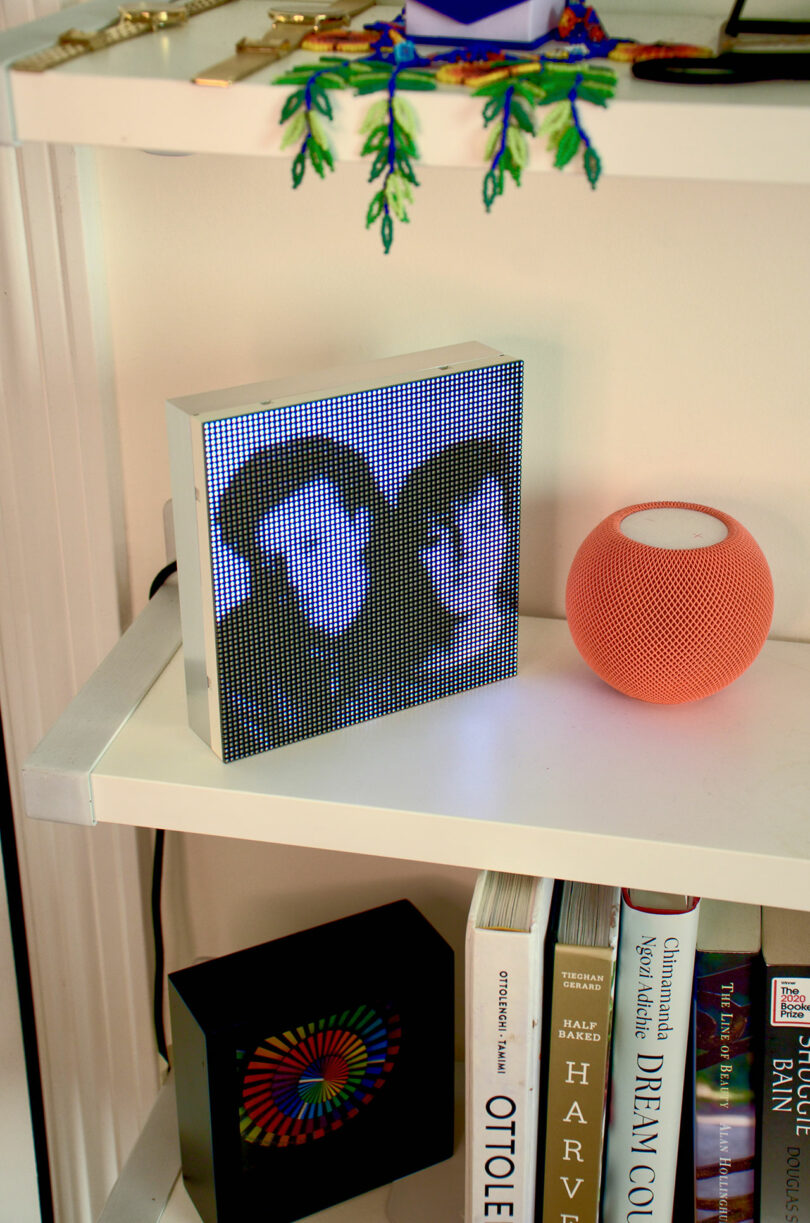
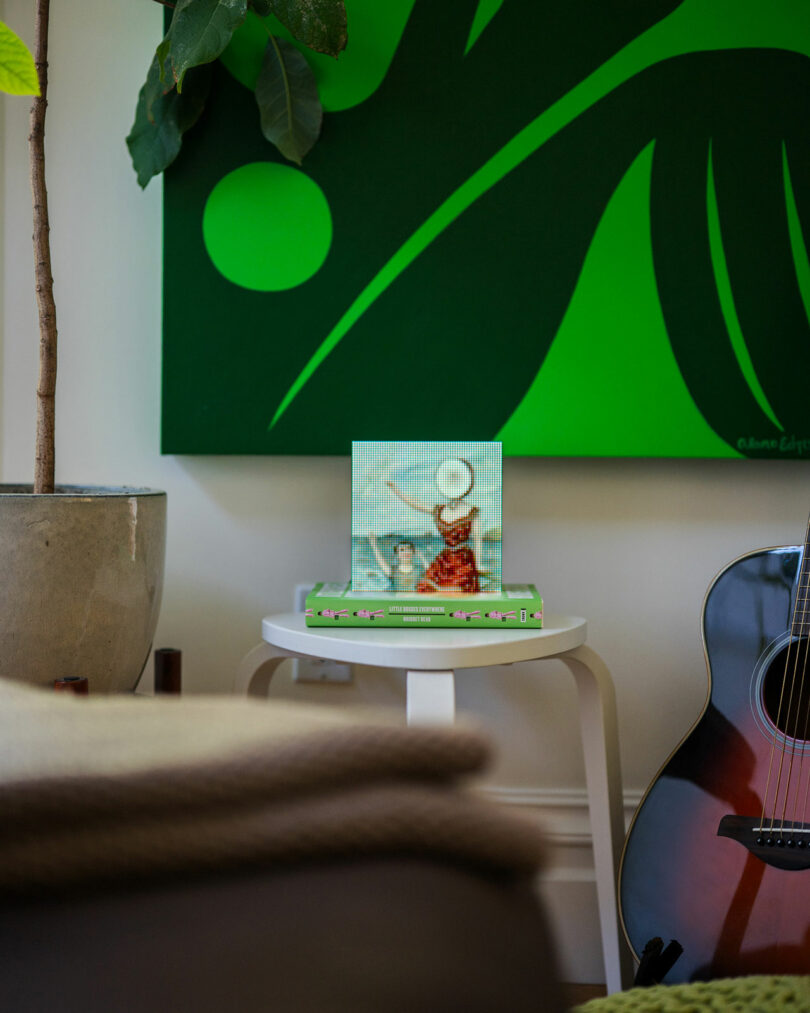
“If you grew up flipping LPs or studying CD covers, Tuneshine brings that magic into today’s streaming world,” says Butler. “And for a generation raised on playlists and AirPods, Tuneshine adds something new and unexpected to the music experience: visuals.”


There’s something to discounting and recontextualizing these two aspects of listening to music and having an endless stream of changing visuals appear from the corner of the room. The 1.6-inch thick case is finished in light and dark wood options, not cheap plastics. There are also special edition colors like pearl, ruby, and sapphire. As a “piece of furniture” it fits in well within different types of interiors. It adds a touch of retro-styling but with a contemporary modality.
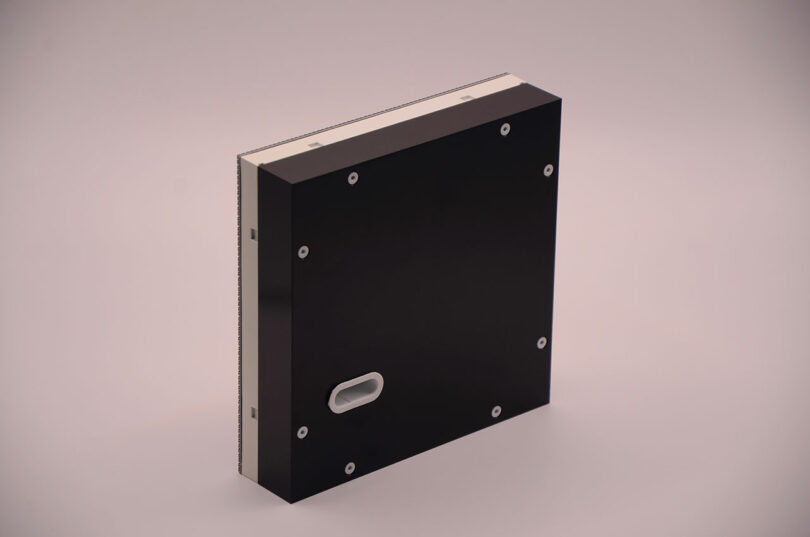
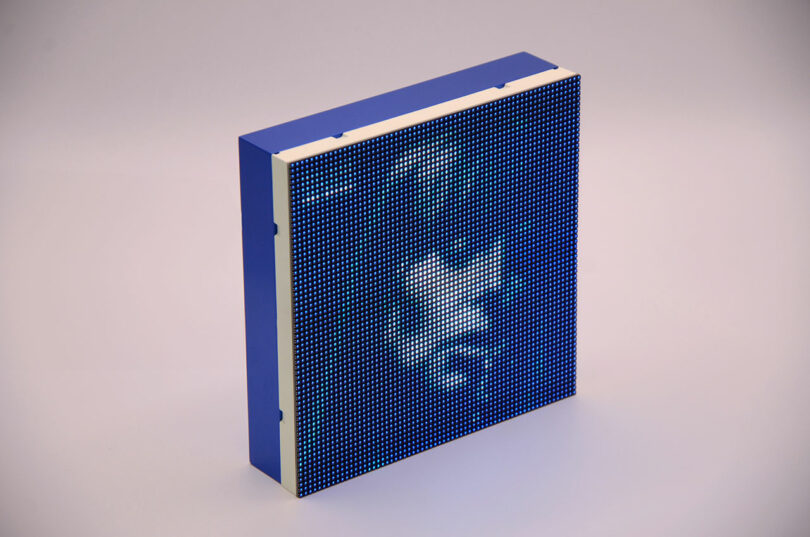
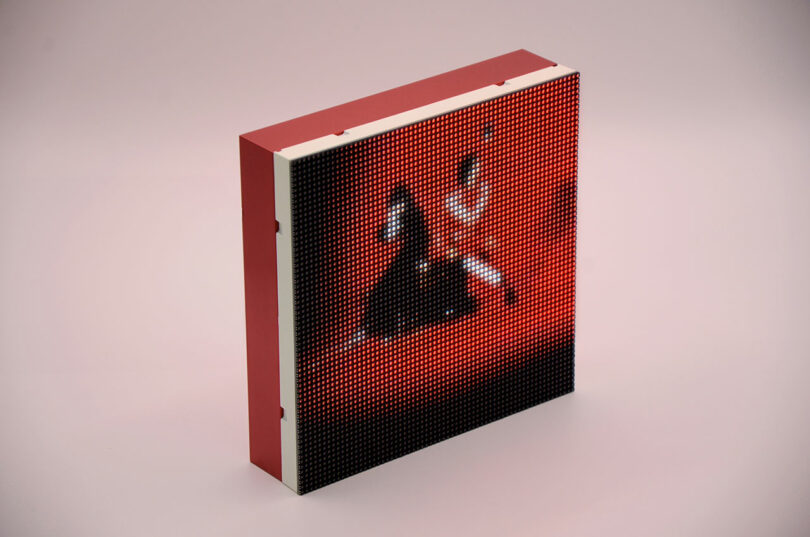
Tuneshine is kitted out with a 6-foot braided USB-C cable and 20W power brick (with a 100-250 AC input). It requires an iOS or Android device for setup, and a 2.4GHz WiFi connection.

Tuneshine founder Tobias Butler
To learn more or to purchase Tuneshine for $199 (and up, depending on the model), please visit tuneshine.rocks.
Photography courtesy of Tuneshine.